Moving truck sizes should match the amount, weight, and shape of your items. A small apartment may need a cargo van or compact box truck. A full home or office may need more space. Careful measuring, safe loading, and extra room help prevent damage, delays, and shifting during travel.
A move can look simple until the truck arrives. A sofa may not fit through the door. Boxes may take more room than expected. Choosing a truck before making a full list can lead to a rushed day of moving.
Bluffton Movers helps local residents plan before moving day. The goal is not to fill every inch. The goal is to choose a vehicle that fits the load, route, and crew.
Table of Contents
- How do you choose the right moving truck size?
- What moving truck sizes are available?
- How much can each moving truck size hold?
- What should you measure before renting a moving truck?
- How should you load a moving truck so items do not shift?
- What does a moving truck rental usually not include?
- When should you move, and how long will the truck take?
- Key takeaways
- Frequently Asked Questions
- Conclusion
How do you choose the right moving truck size?
The right truck size depends on your full inventory, not just room count. List furniture, appliances, boxes, outdoor items, and odd-shaped pieces first. Leave some extra room because packed items need padding, straps, and safe loading space.
Match truck capacity to your home, office, and inventory
Room count gives only a rough starting point. A small home with heavy furniture may need more space than a larger home with few belongings. An office may also need room for desks, chairs, file cabinets, computers, and packing materials.
Sort your items into groups before checking truck options:
- Large furniture, such as sofas, beds, tables, and dressers
- Appliances, including refrigerators, washers, and dryers
- Small boxes, wardrobe boxes, and fragile containers
- Patio, garage, shed, or storage items
- Special items that need extra padding or careful placement
A move may need a larger truck when it includes bulky pieces, many appliances, or poor stacking choices. A smaller truck may work for a light load, a one-room move, or a few large items. Bluffton Movers can help Bluffton homeowners, tenants, and business owners compare the inventory with the loading plan.
Why furniture dimensions matter more than room count
Room count does not show how much space a sectional sofa or cabinet needs. Measure the longest, widest, and tallest sides of each large item. Also note if the item can be turned, folded, or taken apart.
The safest choice often leaves open space. That space holds blankets, straps, and padding. It also gives the loader room to build stable rows instead of forcing items into small gaps.
What moving truck sizes are available?
Moving vehicles range from small cargo vans to large box trucks. Each one suits a different load, road, and loading plan. The inside length, width, height, wheel wells, door opening, and weight limit all matter.
Cargo vans and pickup trucks for small moves
Cargo vans and pickup trucks can work for a few furniture pieces or boxes from one room. They are easier to park and may suit a short local move. Their small cargo areas can become crowded fast when items need padding.
A pickup bed also leaves items open to weather without proper cover. Boxes may shift or fall. Furniture may suffer damage from rain, dust, or wind. A cargo van protects the load better, but its ceiling and door opening may limit tall pieces.
These choices usually suit light loads rather than a full household. Check the payload limit before adding appliances, books, tools, or other heavy items. The vehicle must carry the load safely, not only hold it.
Box trucks for apartments, homes, and offices
Box trucks have an enclosed cargo area with a tall body and rear door. They are common for apartment moves, home moves, and office relocations. Some have a ramp or liftgate, but these features are not on every truck.
Small box trucks may suit a studio, one-bedroom apartment, or limited office load. Medium trucks may fit a larger apartment or modest home. Large box trucks may suit a full home or office, but they need more driving skill and careful weight placement.
Confirm the inside measurements, door opening, ramp type, weight limit, and tie-down points. Two trucks with similar labels may have different usable cargo areas. The rental provider’s exact details should guide your final choice.
How much can each moving truck size hold?
A truck’s usable space depends on item shape, packing skill, weight, and protection needs. Boxes stack well, but sofas, mattresses, tables, and appliances create gaps. A safe load may use more space than a tightly packed load.
Estimating space for boxes, furniture, and appliances
A written inventory helps you plan space before rental day. Give each large item an estimated size. Group boxes by size and weight. Keep heavy cartons low and lighter cartons above them.
Furniture that comes apart may use less space, but its parts must be labeled and wrapped. A bed frame may fit along a wall after disassembly. A large table may still need a wide, flat section. Appliances may need to stay upright and should be secured against movement.
Count items that are easy to forget. Lamps, plants, tools, bicycles, patio furniture, cleaning supplies, and garage bins can fill the last open spaces. A moving checklist can help prevent a late truck-size change.
Why a partly filled truck can be safer
A partly filled truck can be safer than an overloaded one. Extra room allows the loader to balance heavy items, protect fragile goods, and secure tall pieces. It also lowers the chance that boxes will be crushed when the door closes.
Overloading creates more than a space problem. It can affect handling, braking, tires, and the condition of the load. Follow the vehicle’s weight limit. Place heavier items over the truck’s strongest floor area.
The best truck is large enough for a stable load without leaving items loose. Blankets, straps, and dividers take space, but they protect belongings during turns, stops, and road changes.
What should you measure before renting a moving truck?
Before renting, measure your belongings, the path out, and the loading area. The truck must fit the cargo and reach the property without creating another problem. A short measuring session can prevent a failed pickup or hard loading day.
Create an inventory with dimensions and special handling needs
List each large item, its size, its known weight, and its handling needs. Mark glass, electronics, artwork, plants, and items that cannot be stacked. Note pieces that need two or more people or a dolly.
Take photos of unusual items and write down their parts. Put small hardware in labeled bags taped to the matching furniture. Empty drawers, secure doors, and remove shelves when practical.
Place clear labels on more than one side of each box. Labels such as kitchen, bedroom, fragile, or open first help the unloading crew. They also reduce the need to move boxes around inside the truck.
Check doors, stairs, elevators, and loading access
The largest item must pass through every part of the route. Measure doorways, halls, stair turns, elevator doors, and gates. Check ceiling height near the loading area. Look for narrow paths, low branches, and tight parking spots.
Apartment and office moves may need building rules, reserved elevators, or protected floors. A manager may limit loading times or ask for proof of insurance. Confirm these details before truck day.
The truck needs room to park and open its rear door or ramp. In Bluffton, street parking, building layouts, and weather can affect the plan. Bluffton Movers can discuss loading and unloading help when you want to drive but need trained help with heavy or awkward items.
How should you load a moving truck so items do not shift?
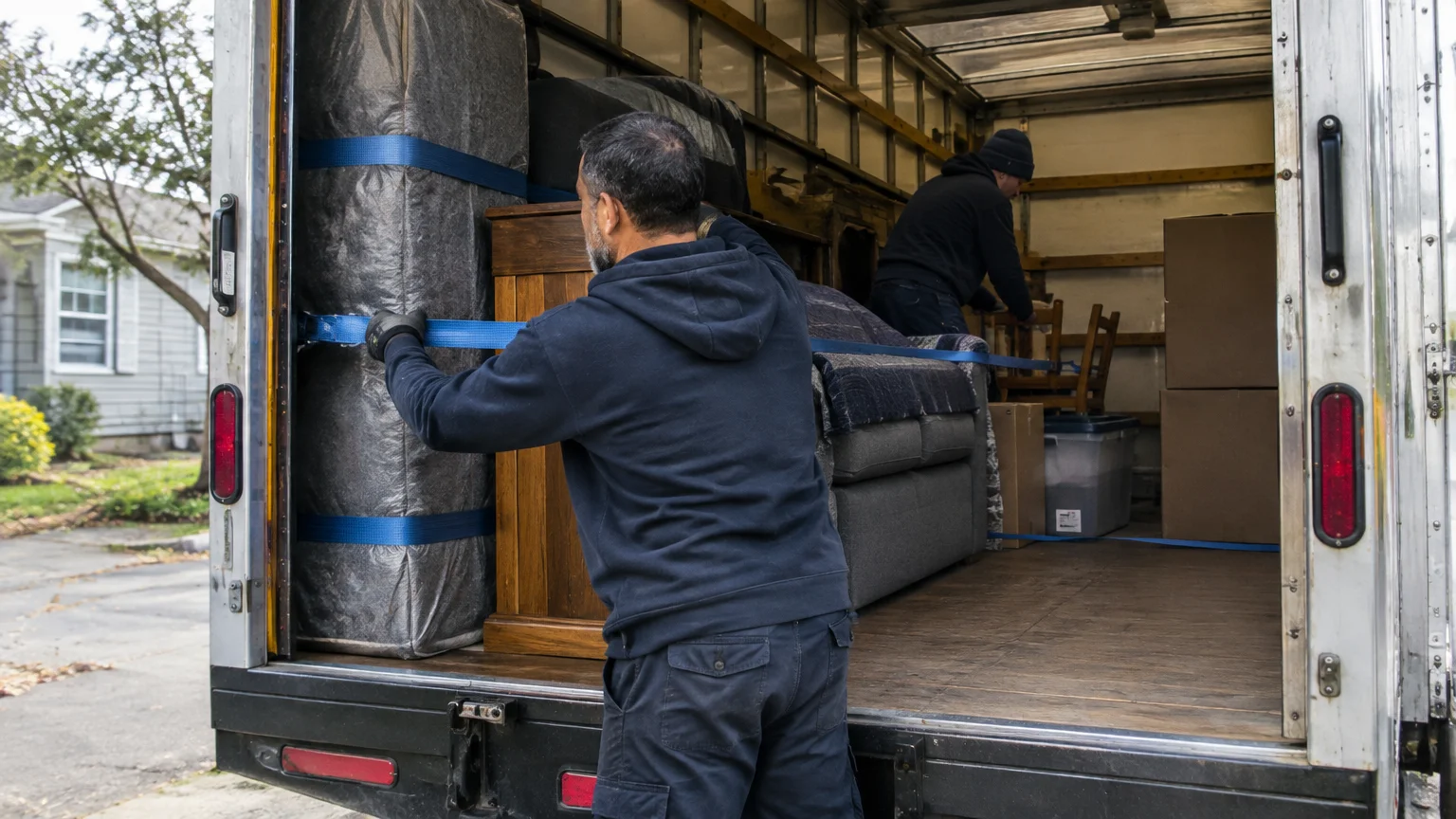
Load from the front wall toward the rear. Place heavy, stable items low. Keep weight balanced from side to side and secure tall pieces as the load rises. Fragile items should not sit under heavy boxes or beside open gaps.
A safe loading order from heavy furniture to fragile boxes
A steady loading order makes the truck more stable. Use moving blankets before placing furniture against other items. Secure large pieces as soon as they are in position, not only after the truck is full.
- Place mattresses, sofas, tables, and other large items near the front wall.
- Add heavy boxes and appliances low, with weight spread across the floor.
- Fit medium boxes into open spaces without crushing soft furniture.
- Place light and fragile boxes higher, away from heavy pressure.
- Fill small gaps with soft items while keeping doors and tie-down points clear.
- Check the load from front to back before closing the door.
Avoid making a tall wall of loose boxes. Rows need support from furniture, straps, or load bars. Keep the last items easy to reach if you need to inspect or adjust the load.
Using straps, pads, dollies, and tie-down points
Moving blankets protect surfaces from scratches, but they do not stop movement alone. Straps connect items to tie-down points or hold sections together. A dolly helps move heavy pieces with less lifting. A ramp can reduce strain at the truck door.
Match the equipment to the task. A strap should not press on a fragile surface or sharp edge. Keep furniture pads dry and flat. Test each secured section with a careful push before closing the truck.
You do not need a professional for basic sorting, measuring, labeling, or simple packing. Trained help is wise for heavy appliances, narrow stairs, large safes, and awkward furniture. Unsafe lifting can cause injury even when the truck size is correct.
What does a moving truck rental usually not include?
A truck rental usually provides the vehicle, but you must check what comes with it. Packing supplies, loading labor, moving tools, driving plans, fuel, and protection options may need separate planning. The rental agreement gives the exact details.
Packing materials and loading equipment to arrange
You may need boxes, tape, paper, stretch wrap, mattress covers, furniture pads, straps, a dolly, and a ramp. Some providers offer selected equipment, but supply can vary by location and truck. Confirm these items before pickup.
Good packing protects the load before it enters the truck. Wrap dishes and place them upright in strong boxes. Nest bowls with padding between them. Fill empty spaces so pieces cannot move.
Professional help can be useful without hiring a full-service move. Loading & Unloading Help suits people who drive but need help with heavy lifting or careful placement. Apartment Movers may help when stairs, elevators, or tight halls make loading harder.
Driving, fuel, insurance, and responsibility
The driver must understand the truck’s height, turning space, stopping distance, and blind spots. A box truck handles differently from a car or pickup. Review the agreement, driver rules, protection options, fuel duties, and roadside steps before leaving.
You are also responsible for checking the load during the trip when safe. A loose door, broken strap, or shifted stack can become serious. Stop in a safe place before opening or adjusting anything.
A long-distance move needs more planning for route length, weather, rest, and delivery time. Long Distance Movers can handle transport when you do not want to drive the full route. Commercial & Office Movers may reduce downtime when a business must move equipment and records.
When should you move, and how long will the truck take?
The best moving day depends on traffic, weather, building access, loading time, and route length. The truck may be available for a set period, but the full move also needs time for parking, loading, driving, unloading, and delays.
Choose a moving day based on access and weather
A weekday may have different traffic and building conditions than a weekend. Local rules and demand can change. Choose a day when elevators, loading zones, helpers, and parking are confirmed.
Weather can slow loading and harm unprotected items. Rain makes ramps and floors slippery. Heat can affect workers, electronics, plants, and some materials. Severe weather may require a new plan.
Start with a clear truck access plan. Cones, building notices, parking rules, and reserved elevators can save time. In Bluffton, check property rules and leave room for street or building delays.
Plan loading, driving, unloading, and buffer time
Loading time depends on item count, stairs, elevators, walking distance, packing quality, and available help. A small apartment with nearby parking may move quickly. A large home or office with long halls may take much longer.
The plan should include time for each stage:
- Finish packing and protect furniture before the truck arrives.
- Walk the loading route and decide where heavy items will go.
- Load, secure, and inspect the truck before departure.
- Allow for traffic, fuel stops, weather, rest, and route changes.
- Reserve time to unload, place furniture, and check for damage.
A buffer matters because one blocked elevator or large item can affect the day. Avoid scheduling a lease handoff, utility cutoff, or work shift too close to arrival. A calm plan is safer than rushing every step.
Key takeaways
- Choose by inventory, dimensions, weight, and access, not room count alone.
- Leave room for padding and straps so furniture and boxes stay secure.
- Measure doors, halls, elevators, and parking areas before rental day.
- Load heavy items low and near the front, then add lighter boxes above.
- Confirm what the rental includes, including ramps, pads, dollies, and driver rules.
Frequently Asked Questions
What size truck is best for a one-bedroom apartment?
A small box truck or cargo vehicle may work for a light one-bedroom move, but the inventory decides. A home with large furniture, appliances, or many boxes may need more space. Measure bulky items and confirm the vehicle’s inside dimensions first.
Is it better to rent a truck that is slightly too large?
Some extra room can make loading safer because it allows padding, straps, and balanced placement. Too much empty space may let items move during travel. The best choice leaves room for protection without allowing boxes and furniture to slide.
How do movers know how much space boxes need?
Movers estimate space by counting boxes, measuring large furniture, and checking dense items. Books, tools, and appliances need special care because they can make a truck heavy before it looks full. A written inventory gives a better estimate than room count alone.
Should furniture be taken apart before loading?
Take furniture apart when the maker allows it and disassembly makes carrying safer. Label, wrap, and store the parts together. Some pieces should stay assembled because taking them apart may weaken them or create more handling risk.
When should someone hire help to load a rental truck?
You may handle light boxes, labeling, and simple packing yourself. Trained help is wise for heavy appliances, large furniture, narrow stairs, long carries, or items needing special tools. Loading & Unloading Help can support a do-it-yourself move without full-service transportation.
Conclusion
The right moving truck size supports a safer, calmer moving day. A careful inventory, accurate measurements, proper loading order, and suitable equipment matter more than choosing by room count. Confirm what the truck includes and plan time for each part of the move.
Bluffton Movers can help homeowners, tenants, and business owners think through loading needs before moving day. Contact us to discuss moving help that fits your plan.